Opera and the city
Tosca's Rome: the opera and the city
Puccini's Tosca premiered in Rome in 1900 and is set in three real places there. Where they are, and what you can see of them before or after the roof.
Reserve a place on the roof ↗Quick answer
Puccini's Tosca had its first night on 14 January 1900 at Rome's Teatro Costanzi and is set in the city in June 1800. Its three acts take place in the church of Sant'Andrea della Valle, in Scarpia's apartment in the Palazzo Farnese and at the top of Castel Sant'Angelo, which you can pick out from the rooftop.
An opera born in Rome
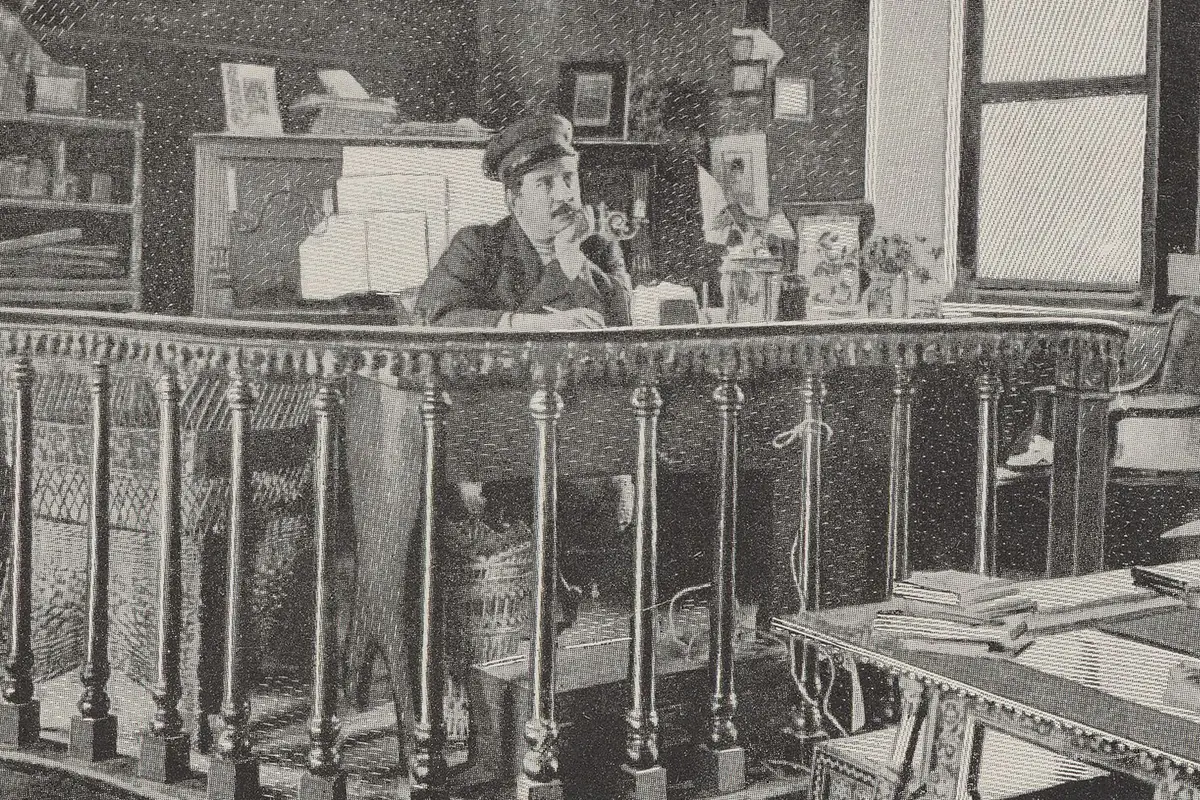
Giacomo Puccini was born in Lucca in 1858 and is widely regarded as the most successful Italian opera composer after Verdi. Tosca, Luigi Illica and Giuseppe Giacosa wrote the libretto after Victorien Sardou's play La Tosca of 1887, and the first performance took place at Rome's Teatro Costanzi on 14 January 1900. Two of its arias are in the rooftop programme, so the evening comes with a local connection.
The Teatro Costanzi
The theatre was named for Domenico Costanzi, the contractor who financed it, and opened on 27 November 1880 with Rossini's Semiramide. Mascagni's Cavalleria rusticana premiered there on 17 May 1890, and Tosca followed. The city bought the theatre in 1926 and renamed it Teatro Reale dell'Opera, and it became the Teatro dell'Opera after the monarchy ended in 1946. The name Costanzi is still used for the main auditorium.
June 1800
The story is set in Rome in June 1800, when the Kingdom of Naples' hold on the city is threatened by Napoleon's invasion of Italy. A singer, Floria Tosca, loves the painter Mario Cavaradossi. The police chief, Scarpia, pursues her and holds Cavaradossi's fate in his hands. The plot is dark, which makes the lyrical arias stand out all the more.
Act one: Sant'Andrea della Valle
The first act takes place inside the church of Sant'Andrea della Valle, a real church in Rome. The three acts together put the story on a map of the city: a church, a palace and a fortress. No piece from this act is on the organiser's sample list, but it is where the story begins, in a Rome you can still visit.
Act two: the Palazzo Farnese
Scarpia's apartment in the Palazzo Farnese is the setting of the second act, that evening. Here Tosca sings Vissi d'arte, a prayer asking why she is being punished when she has lived for art and for love. It is one of the two Tosca arias on the sample list. The Palazzo Farnese is a real palace in Rome, and the scene gives the opera its most tense hour.
Act three: Castel Sant'Angelo
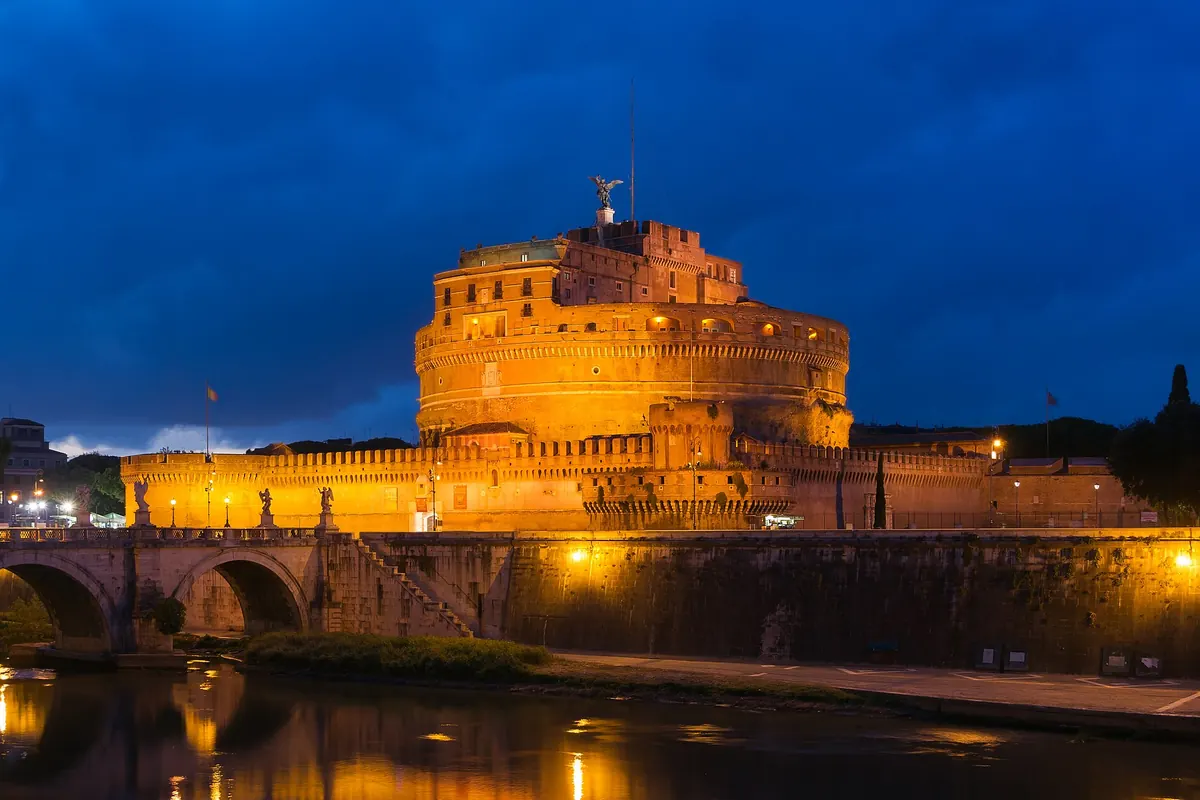
The third act is set at the upper parts of Castel Sant'Angelo, early the following morning. Cavaradossi, in his cell, sings E lucevan le stelle shortly before his execution, and Tosca leaps from the ramparts at the end. Hadrian commissioned the building as a mausoleum, and it was later a fortress, a papal refuge and a prison. It is named among the sights on the rooftop's skyline.
Read next: The Great Beauty rooftop and the view
Other Roman premieres
Tosca is not the only opera that first reached the stage in Rome. Rossini's The Barber of Seville premiered in the city in February 1816, and Verdi's Il trovatore in January 1853. Mascagni's Cavalleria rusticana, premiered at the Teatro Costanzi on 17 May 1890, belongs to the same list. Opera lovers can treat the rooftop as one stop in a longer story of music that was first heard in Rome.
Rossini and Verdi in Rome
Rossini was born in Pesaro in 1792, and The Barber of Seville premiered in Rome in February 1816. It was initially unsuccessful but soon became his best-known work. His last opera, William Tell, came in 1829, and he wrote little for the stage afterwards. Verdi's Il trovatore premiered in Rome in January 1853 and consistently remains one of the three or four most popular operas in his repertoire. Both composers have pieces in the rooftop sample, and both had Roman premieres.
The Teatro dell'Opera today
The city's opera house is at Piazza Beniamino Gigli 1 and is owned by the Municipality of Rome. After the 1926 purchase, a partial rebuild by Marcello Piacentini reopened it on 27 February 1928 with Boito's Nerone. In summer its season moves outdoors to the Baths of Caracalla, built about AD 212 to 216, where the Rome Opera performed from 1937 to 1993 and returned in 2001 on a temporary stage. For a full staged production with an orchestra, the opera house is the place to book.
Frequently asked questions
When and where did Tosca premiere?
At Rome's Teatro Costanzi, on 14 January 1900.
Is Tosca set in Rome?
Yes, in Rome in June 1800, in the church of Sant'Andrea della Valle, the Palazzo Farnese and Castel Sant'Angelo.
Which Tosca arias are on the rooftop programme?
The organiser's sample includes E lucevan le stelle and Vissi d'arte, though the programme can change.
Can I see Castel Sant'Angelo from the roof?
The ticket lists it among the sights of the 360-degree view.
Sources
- Opera Omnia Events: Rooftop Bar Opera Show, The Great Beauty in Rome
- Tosca, English Wikipedia article
- Teatro dell'Opera di Roma, English Wikipedia article
- Castel Sant'Angelo, English Wikipedia article
- Gioachino Rossini, English Wikipedia article
- Giuseppe Verdi, English Wikipedia article
- Giacomo Puccini, English Wikipedia article